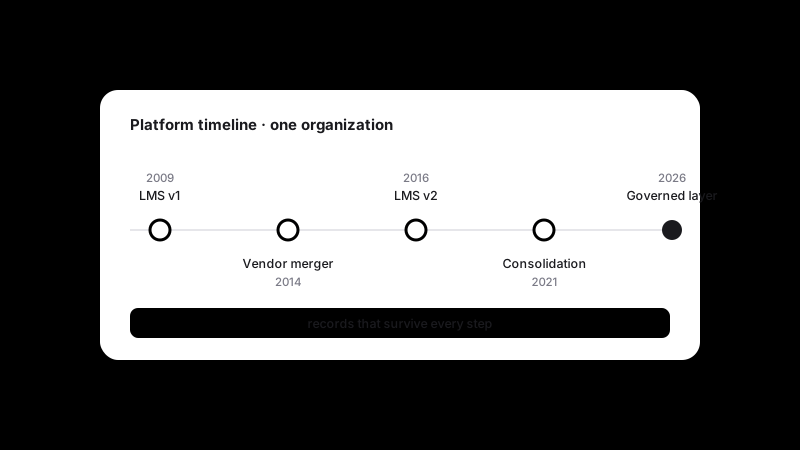
A timeline most organizations recognize
An LMS in 2009. A vendor merger in 2014 that changed the product. A replacement in 2016. A consolidation in 2021 after an acquisition. Each step lost something: archived courses, inactive learners, the version history of a mandatory programme. Ask what training a long-serving employee completed in 2011 and the honest answer is that nobody knows.
Why it matters beyond compliance
Audit evidence is the obvious loss, but not the only one. Skills built over a career become invisible. Content decisions get made without knowing what was tried before. Analytics projects start from a few years of clean data and ignore the rest. The organization's understanding of its own people gets shorter every time a platform changes.
Records as infrastructure
Finance data is treated as infrastructure: it survives every system change because the organization would not tolerate otherwise. Learning data deserves the same treatment. That means a governed layer that outlives platforms, with ownership, lineage and retention recorded as part of the data.
What we are building toward
LearningUnify was founded in January 2026 to make that layer exist. Nine months in, the pattern is consistent across sectors: the transitions differ, the need for records that survive them does not. The organizations that treat learning records as institutional memory rather than platform residue will be the ones that can still answer questions about their people a decade from now.
More from the blog
Neutral by design: why we chose not to build an LMS
The easiest product to sell is another platform. We built a layer instead, and the reason is structural.
Learn more →xAPI, exports and APIs: why lineage matters more than the connection method
Teams argue about which integration method is best. The more important question is whether you can trace every number back to where it came from.
Learn more →Why AI pilots in learning stall, and the inventory that unblocks them
It is rarely the model. Pilots stall because nobody can say what data exists, who owns it, whether it may be used and whether it is accurate.
Learn more →Ready to see your learning data in one place?
Tell us which systems you run and we will show how the platform connects, normalizes and preserves their records.