The shape of an audit question
A regulator, an insurer or an internal audit team asks something like: show me every analyst in EMEA who was required to complete data protection training in the second quarter, which version they completed, when, and where that record came from. A dashboard showing 96% completion answers none of that.
Five things a defensible record contains
The learner, with identity continuity across identifier and role changes. The course and the exact version completed. The requirement that made it mandatory and the population it applied to. The completion date, score and any certificate. And a trace back to the source system and original record.
If any of these is missing, the answer becomes a reconstruction, and reconstructions are where audits go wrong.
Why history breaks
Records left in a retired platform cannot be queried. Duplicated learners split one person's history in two. Completions tied to the current course version rather than the one taken misrepresent what was actually done. Spreadsheets kept as the system of record have no audit trail.
Turning an audit into a query
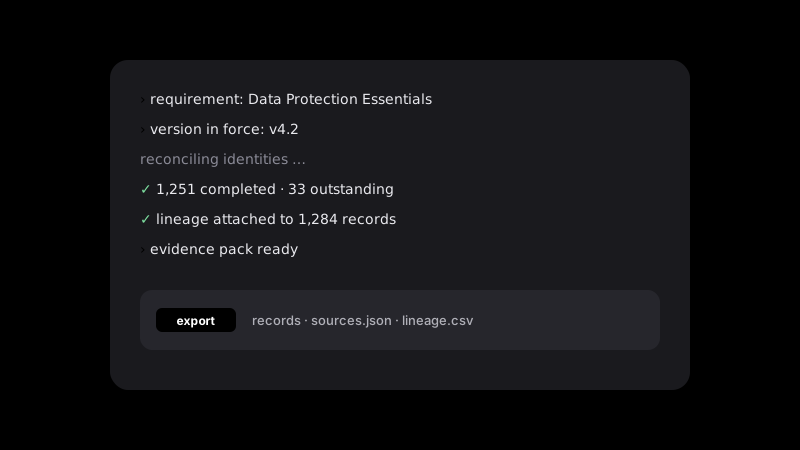
When records are stored normalized, reconciled and version-aware, with lineage attached, the audit question becomes a query and the answer arrives as an evidence pack: the records, the source references and the lineage, exportable for the auditor. LearningUnify's compliance recordkeeping solution is built around this outcome.
Prepare before the request
Keep records continuously reconciled rather than fixing them when asked. Agree retention with legal in advance. Run a test audit pull every quarter so the first real one is not the first one.
More from the blog
Institutional memory should not depend on a vendor contract
Organizations remember through their records. When learning records live only inside platforms that get replaced every few years, the organization forgets.
Learn more →Neutral by design: why we chose not to build an LMS
The easiest product to sell is another platform. We built a layer instead, and the reason is structural.
Learn more →xAPI, exports and APIs: why lineage matters more than the connection method
Teams argue about which integration method is best. The more important question is whether you can trace every number back to where it came from.
Learn more →Ready to see your learning data in one place?
Tell us which systems you run and we will show how the platform connects, normalizes and preserves their records.